

Basket
0₴
These types are often confused, but the difference is simple: some are designed for fixed wiring in the wall, while others are for flexible connection of equipment. Below is a comparison by purpose and answers to the questions that are most frequently asked at the counter.
| Brand | Tendons | Purpose | Where to apply |
|---|---|---|---|
| ВВГ | Hard, copper | Power cable for stationary wiring | Sockets, lighting, entrance to the apartment and house. |
| ВВГнг-LS | Hard, copper | Same, but with reduced fuel consumption and smoke emissions. | Wiring in a house, evacuation routes |
| NYM | Hard, copper | Power cable with chalk sheath, convenient stripping | Wiring in apartments and houses. |
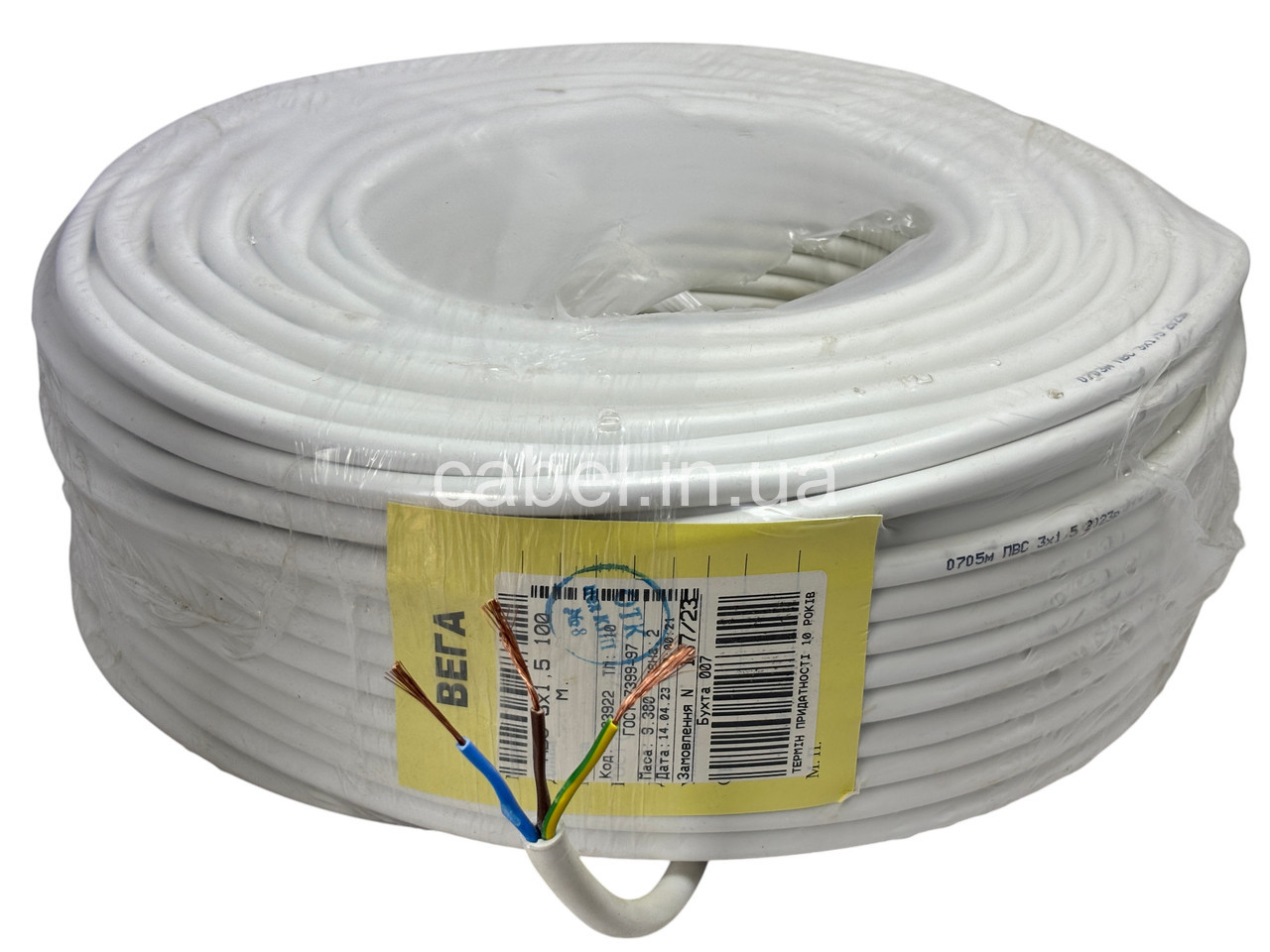
| ПВС | Flexible, multi-stranded | Connecting wire for carrying and bending | Extensions, equipment connection |
| ШВВП | Flexible, thin | Light cord for low-power devices | Light fixtures, household low-power extension cords |
VVG is a power cable with rigid copper conductors for stationary wiring: it is laid in walls, grooves, and trays. PVC is a flexible wire made of stranded conductors, designed for carrying and bending, therefore used for extension cords and connecting household appliances, not for concealed wiring.
NYM is a power cable according to the German standard with an additional chalk sheath under the insulation. It is used for wiring in apartments and houses when neat installation and convenient termination are required. In terms of purpose, it is similar to VVGng, but differs in the sheath construction.
PVC-insulated wire for low-power devices, lamps, and extension cords with low current. Not suitable for wiring outlets: the cross-section and insulation are not designed for continuous load. For outlets, use VVG 3×2.5.
The standard choice is copper VVG (or VVGng-LS, which is less flammable and smoky): 3x2.5 for sockets and 3x1.5 for lighting. Powerful equipment is powered by separate lines of appropriate cross-section.
Flexible PVC wire of the required cross-section: 3×1.5 or 3×2.5 depending on the power of the device. It does not break when bent, unlike rigid VVG.
Further. how to select a cross-section and what marking means on the shell.